

DevOps Course in Chennai
Master DevOps, CI/CD, Docker, Kubernetes & Cloud Technologies
Build practical skills through hands-on training and real-world DevOps projects.
What Is DevOps?
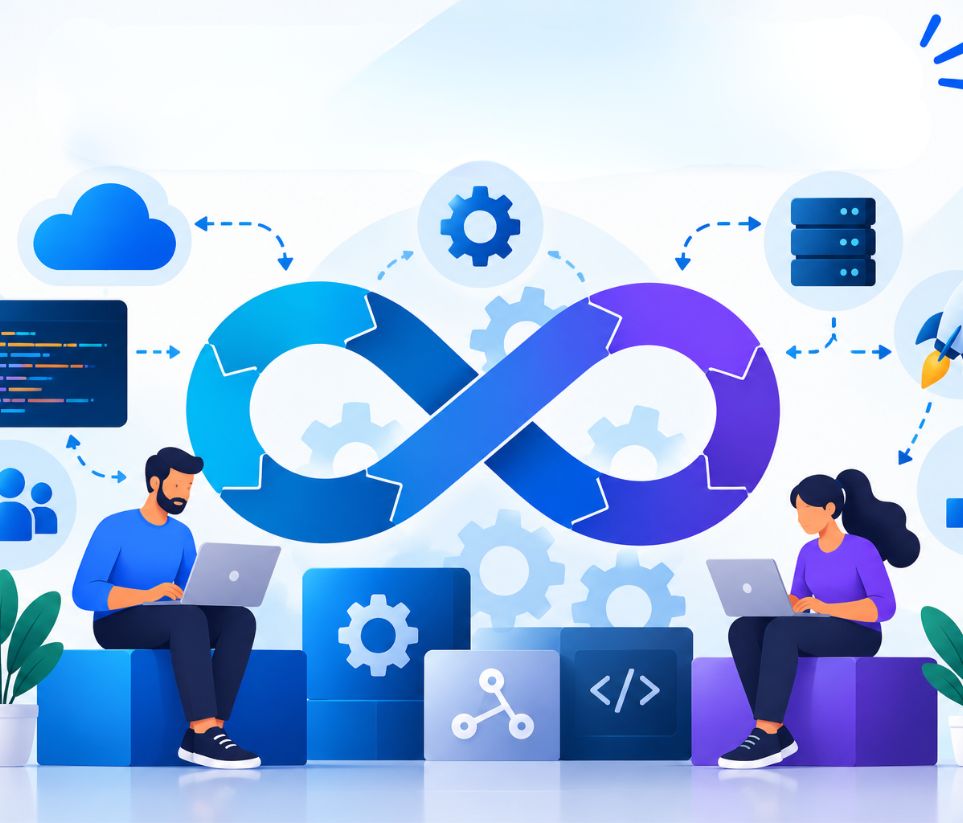
DevOps is a combination of practices, tools, processes, and collaborative approaches that bring software development and IT operations closer together.
Traditional development and operations teams often worked in separate silos. DevOps encourages cross-functional collaboration, automation, continuous integration, continuous delivery, and reliable deployment practices to help teams deliver software more efficiently.
A typical DevOps lifecycle can include:
Plan → Code → Build → Test → Release → Deploy → Operate → Monitor
DevOps commonly works alongside cloud computing, Agile development, automation, containers, Infrastructure as Code, monitoring, and continuous delivery practices.
Why Is DevOps Important?
Modern organisations need to deliver software quickly while maintaining reliability, security, and quality. DevOps practices help development and operations teams automate repetitive processes and create more consistent software delivery workflows.
DevOps can help organisations:
Automate software build and deployment processes
Reduce manual deployment effort
Improve collaboration between development and operations teams
Establish consistent CI/CD workflows
Identify issues earlier through automated testing and monitoring
Improve deployment consistency and reliability
Support faster and more frequent software releases
Manage infrastructure using automation and code
As organisations continue adopting cloud-native technologies and automated software delivery, DevOps skills remain relevant across modern technology teams.
What Will You Learn in Our DevOps Course?
Our DevOps training in Chennai focuses on the core tools, practices, and workflows used in modern software delivery environments.
Linux Fundamentals
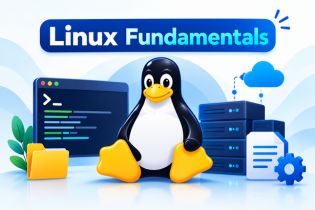
Build a foundation in Linux environments, command-line operations, file management, permissions, processes, networking basics, and system administration concepts.
Git & Version Control
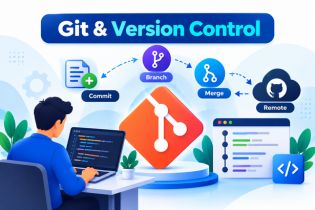
Learn how development teams manage source code and collaborate using Git and popular repository platforms.
Topics can include:
● Git fundamentals
● Branching and merging
● Commit management
● Pull requests
● Repository workflows
● Collaboration practices
Platforms such as GitHub, GitLab, and Bitbucket can be introduced depending on the course curriculum.
CI/CD Pipelines
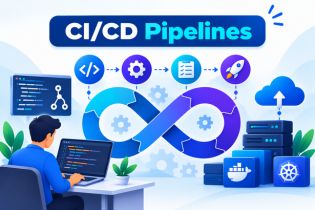
Understand how Continuous Integration and Continuous Delivery/Deployment automate software build, testing, and deployment workflows.
Learners can gain practical exposure to tools such as:
● Jenkins
● GitHub Actions
● GitLab CI
● Azure DevOps
The exact tools covered should follow the current DreamsPlus curriculum.
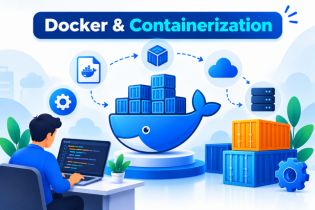
Docker & Containerization
Learn how Docker packages applications and their dependencies into portable containers.
Topics can include:
● Docker images
● Containers
● Dockerfiles
● Container networking
● Volumes
● Container registries
● Application containerization
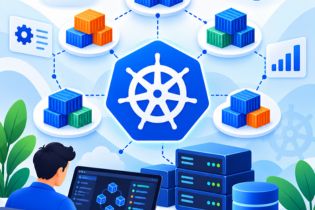
Kubernetes
Understand the fundamentals of container orchestration and how Kubernetes helps deploy, manage, scale, and maintain containerized applications.
Key concepts can include:
● Pods
● Deployments
● Services
● ConfigMaps
● Secrets
● Namespaces
● Scaling
● Basic cluster concepts
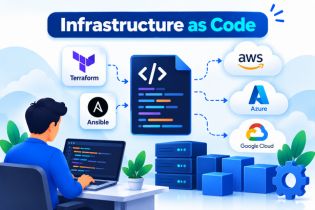
Infrastructure as Code
Learn how infrastructure can be defined and managed using code rather than relying entirely on manual configuration.
Tools may include:
Terraform | Ansible | CloudFormation
Learners can understand infrastructure provisioning, configuration management, and repeatable deployment workflows.
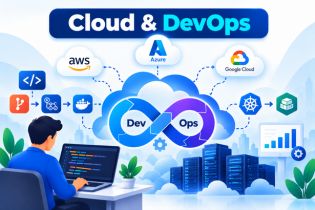
Cloud & DevOps
Understand how DevOps practices are applied within cloud environments.
Depending on the curriculum, learners can gain exposure to:
AWS | Microsoft Azure | Google Cloud
Cloud learning can include deployment concepts, infrastructure, automation, access management, and integration with DevOps workflows.
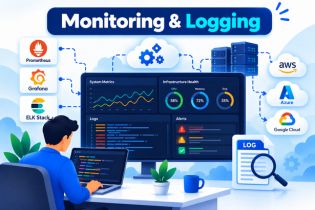
Monitoring & Logging
Learn the fundamentals of monitoring applications and infrastructure to identify performance issues, failures, and operational problems.
Tools and technologies may include:
Prometheus | Grafana | ELK Stack
DevOps Tools & Technologies
The DevOps ecosystem includes a broad range of tools covering different stages of the software delivery lifecycle.
Version Control
CI/CD
Containers & Orchestration
Infrastructure as Code
Monitoring & Logging
Cloud Platforms
DevOps Learning Roadmap
Explore key Azure technologies through practical, career-focused learning.
1. Foundation
Start with:
● Linux fundamentals
● Git and version control
● Networking basics
● Agile and DevOps concepts
● Basic scripting
2. Core DevOps
Learn:
● CI/CD concepts
● Jenkins or other CI/CD platforms
● Automated builds
● Testing workflows
● Deployment automation
● Docker fundamentals
3. Container Orchestration & IaC
Progress into:
● Kubernetes fundamentals
● Container orchestration
● Terraform
● Ansible
● Infrastructure automation
4. Cloud, Monitoring & Operations
Develop knowledge of:
● Cloud infrastructure
● Cloud-based DevOps workflows
● Monitoring
● Logging
● Alerting
● Application and infrastructure operations
5. Capstone Project
Apply your skills by building an end-to-end DevOps workflow that can include:
Code → Build → Test → Containerize → Deploy → Monitor
A practical capstone project can help learners understand how individual DevOps tools work together within a real-world software delivery workflow.
Skills You Can Develop
Through practical DevOps training, learners can develop skills in:
- Linux system fundamentals
- Git and version control
- CI/CD pipeline development
- Build and deployment automation
- Docker containerization
- Kubernetes fundamentals
- Infrastructure as Code
- Terraform and Ansible
- Cloud DevOps workflows
- Monitoring and logging
- Deployment automation
- Troubleshooting and operational workflows
- Agile and DevOps collaboration practices

Benefits of Learning DevOps
Build Cloud & Automation Skills
DevOps combines software delivery, automation, infrastructure, and cloud technologies, giving learners a broader technical skill set.
Work With Industry-Relevant Tools
Gain practical exposure to widely used DevOps technologies such as Git, Docker, Kubernetes, Jenkins, Terraform, and cloud platforms, depending on the course curriculum.
Improve Software Delivery Skills
Understand how automated CI/CD pipelines can streamline the build, testing, release, and deployment process.
Expand Your Career Options
DevOps knowledge can support career paths across software delivery, cloud infrastructure, automation, platform engineering, and site reliability.
Develop Practical Problem-Solving Skills
Working with deployment pipelines, infrastructure, containers, and monitoring helps learners develop practical troubleshooting and automation skills.
Who Should Learn DevOps?
This DevOps course in Chennai can be suitable for:
Basic Linux, networking, or scripting knowledge can be helpful, but the required fundamentals can be developed progressively through structured training.
Career Opportunities After DevOps Training
DevOps skills can support several technology career paths, including:
DevOps Engineer
Works on automation, CI/CD pipelines, infrastructure, deployments, and collaboration between development and operations teams.
Site Reliability Engineer
Applies software engineering and operational practices to improve system reliability, performance, and availability.
Build & Release Engineer
Focuses on build systems, release processes, deployment workflows, and software delivery automation.
Cloud Infrastructure Engineer
Works with cloud infrastructure, automation, configuration, and operational environments.
Automation Engineer
Develops automated workflows to reduce manual processes across software development and IT operations.
Platform Engineer
Builds and maintains internal platforms, tooling, and infrastructure that enable development teams to deliver applications efficiently.
Career responsibilities and requirements vary by organisation, experience level, and technology stack.
DevOps vs SRE vs Cloud Engineering
| Career Path | Primary Focus | Common Skills |
|---|---|---|
|
DevOps Engineer |
Software delivery, automation & operations | CI/CD, Git, Docker, Kubernetes, Cloud |
| SRE | Reliability, availability & system performance | Automation, Monitoring, Linux, Cloud, SRE practices |
|
Cloud Engineer |
Cloud infrastructure & services | AWS/Azure/GCP, Networking, Infrastructure, IaC |
These roles can overlap, but their primary responsibilities and skill requirements differ across organisations.
Why Choose DreamsPlus for DevOps Training?
DreamsPlus can highlight the following features if they are part of the current DevOps program:
Trainers with practical DevOps experience
Hands-on labs using DevOps tools
Practical CI/CD pipeline exercises
Docker and Kubernetes labs
Infrastructure as Code practice
Real-world deployment projects
Career guidance and interview preparation
Resume-building support
Placement assistance
Flexible learning options
Updated learning resources
Practical exposure can help learners understand how individual DevOps technologies work together rather than learning each tool in isolation.
DevOps Certification & Further Learning
A DevOps learning path can prepare learners for further specialised learning and professional certifications.
Relevant certification pathways can include:
Certified Kubernetes Administrator (CKA)
AWS Certified DevOps Engineer – Professional
Microsoft Certified: DevOps Engineer Expert (AZ-400)
Certification Information
Certification requirements, exam structures, and eligibility can change. Learners should check the current official certification requirements before registering for an examination.
Certifications are optional professional credentials and should not be presented as a guaranteed outcome of completing the DreamsPlus training program.
Related DevOps Learning Paths
Learners looking to specialise further can explore areas such as:
DevOps Foundation
Docker & Kubernetes
CI/CD Pipeline Engineering
Infrastructure as Code with Terraform & Ansible
AWS / Azure DevOps
Site Reliability Engineering
Cloud Engineering
Only display courses that are currently offered by DreamsPlus and have relevant course information.
Start Your DevOps Career with DreamsPlus
Build practical skills in Linux, Git, CI/CD, Docker, Kubernetes, Cloud & Automation through hands-on DevOps training.
Get course details, syllabus, duration, batches & fees.
Frequently Asked Question
Advanced programming knowledge is not necessarily required to begin DevOps. Basic scripting knowledge such as Bash or Python can be helpful for automation and can be developed progressively.
Freshers can build a career foundation in DevOps by developing skills in Linux, Git, cloud platforms, CI/CD, containers, and automation. Practical projects and strong fundamentals can help prepare learners for entry-level opportunities.
DevOps is a broader approach that brings development and operations together through collaboration, automation, and continuous delivery. SRE applies software engineering practices to operations with a strong focus on reliability, availability, performance, and automation.
The time required depends on your existing IT knowledge, learning pace, practical exposure, and course structure. Consistent hands-on practice is important for developing job-ready DevOps skills.
DevOps can be implemented across AWS, Microsoft Azure, and Google Cloud. The exact cloud platform or platforms covered should be confirmed based on the current DreamsPlus curriculum.
A practical DevOps program can include hands-on labs and an end-to-end capstone project involving areas such as CI/CD, Docker, Kubernetes, cloud deployment, or Infrastructure as Code. Project details should be confirmed with DreamsPlus.
If placement assistance is part of the current DreamsPlus DevOps program, the page can highlight services such as resume support, mock interviews, and placement guidance. The exact support available should be confirmed before publishing.