

Welcome to DreamsPlus

Introduction

Slow deployments cost more than time. Every delayed release means slower feedback, longer
bug-fix cycles, and a widening gap between what the business needs and what engineering can ship.
For many organizations, the bottleneck isn’t tooling — it’s that teams haven’t been trained to use
DevOps practices consistently. That’s where structured corporate DevOps training makes a
measurable difference.

Why Deployment Speed Stalls

Most companies already own the tools — CI/CD pipelines, containerization platforms, monitoring dashboards. But tools alone don’t fix slow releases. Common blockers include:

Manual handoffs between development, QA, and operations

Inconsistent branching and release practices across teams

Fear of deployment failure leading to infrequent, high-risk releases

Lack of shared ownership between developers and operations staff

These are process and culture problems, not tooling problems — and process problems are solved through training, not procurement.

How DevOps Training Closes the Gap

A well-structured corporate DevOps program addresses the actual causes of deployment delay: 

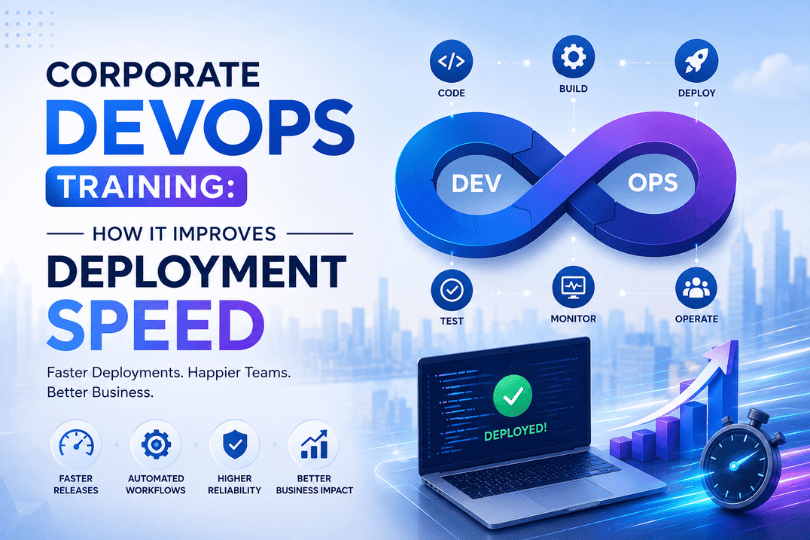
Standardized CI/CD practices

Teams learn to build and maintain pipelines that automatically test, build, and deploy code, removing manual steps that introduce delay and error

Infrastructure as Code (IaC

Training in tools like Terraform or Ansible lets teams provision environments consistently, cutting down environment-related deployment failures.

Monitoring and feedback loops

Employees learn to set up real-time monitoring so issues are caught immediately after deployment, not days later.

Collaborative culture

DevOps training breaks down the “dev vs. ops” divide, teaching cross-functional teams to share responsibility for releases.

Incremental deployment strategies

Techniques like blue-green deployments and canary releases let teams ship smaller changes more frequently, reducing risk per release.

The Business Impact

Organizations that invest in structured DevOps training typically see:

Shorter release cycles, from weeks to days or hours

Fewer failed deployments and faster rollback when issues occur

Reduced dependency on a small group of “tribal knowledge” engineers

Better alignment between engineering output and business timelines

What Effective Corporate Training Looks Like

Generic online courses rarely translate into real workplace change. Effective corporate DevOps
training should: 

  • Be tailored to the organization’s existing tech stack and workflows
  • Include hands-on labs, not just theory
  • Involve both developers and operations/infrastructure staff
  • Be delivered in a format that fits working schedules (weekend batches, evening sessions, or on-site workshops)

Conclusion

Deployment speed isn’t just an engineering metric — it’s a competitive advantage. Teams that release faster, with fewer failures, respond to market and customer needs quicker than their competitors. Corporate DevOps training turns scattered tool usage into a disciplined, repeatable process — and that discipline is what actually moves deployment speed. 

Leave a Reply

Your email address will not be published. Required fields are marked *