

The Role of a Scrum Master in Scaling Agile Frameworks
Scaling agile frameworks is becoming essential as organizations grow and seek to extend agile practices across multiple teams. In this environment, the role of a Scrum Master becomes more critical and complex. Unlike traditional Scrum implementations that focus on a single team, scaling requires Scrum Masters to collaborate across teams, manage interdependencies, and ensure the smooth flow of value. This blog will delve into the vital role of a Scrum Master in scaling agile frameworks, offering actionable insights and tips.
Why Scaling Agile Frameworks is Important
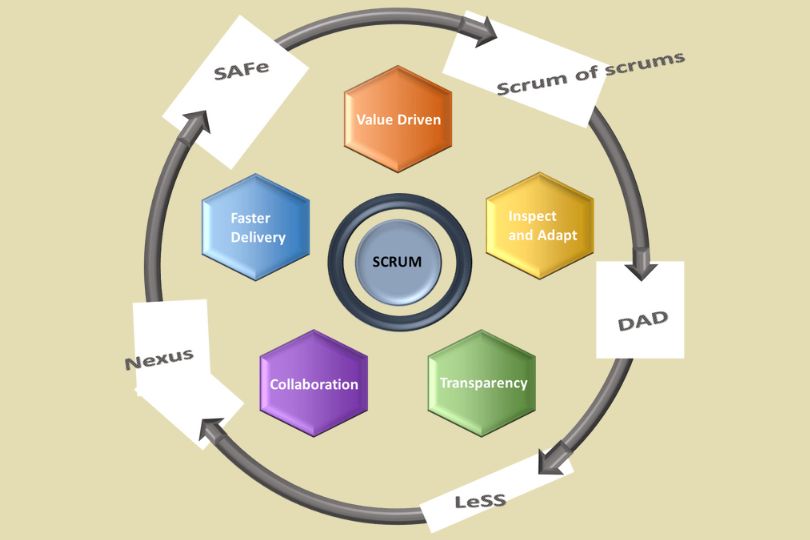
Organizations adopt scaling frameworks like SAFe (Scaled Agile Framework), LeSS (Large-Scale Scrum), and Nexus to coordinate multiple agile teams working on large, complex projects. Scaling enables:
- Alignment across teams and stakeholders.
- Increased efficiency by reducing bottlenecks.
- Consistent value delivery across all levels of the organization.
However, scaling also introduces challenges in communication, coordination, and governance—which is where the Scrum Master plays a pivotal role.
Key Responsibilities of a Scrum Master in Scaling Agile
1. Facilitating Cross-Team Collaboration
In a scaled environment, multiple teams work towards a common goal. Ensuring effective collaboration between teams is crucial.
Tips for Effective Collaboration:
- Conduct Scrum of Scrums: Regular cross-team meetings to discuss progress, dependencies, and impediments.
- Use shared tools: Platforms like Jira or Azure DevOps can help maintain transparency and track progress.
- Encourage open communication: Promote a culture where teams feel comfortable sharing concerns and updates.
2. Managing Dependencies and Impediments
Scaling frameworks often introduce dependencies between teams. Scrum Masters must identify and manage these dependencies to prevent delays.
How to Manage Dependencies:
- Create a dependency board: Visualize inter-team dependencies and track their resolution.
- Engage Product Owners: Work closely with Product Owners to prioritize backlog items based on dependencies.
- Escalate issues: When necessary, escalate impediments that cannot be resolved at the team level.
3. Ensuring Consistency in Scrum Practices
When scaling, consistency in Scrum practices across teams ensures that everyone is aligned and working efficiently.
Steps to Ensure Consistency:
- Standardize ceremonies: Ensure that all teams follow the same sprint cadence and conduct similar ceremonies.
- Provide training: Offer ongoing training and coaching to new teams and members.
- Monitor adherence: Use metrics to track whether teams are following Scrum principles.
4. Coaching and Mentoring Teams
The Scrum Master’s role as a coach becomes more pronounced in a scaled environment. Teams may have varying levels of maturity in agile practices.
Coaching Strategies:
- Tailor coaching to team maturity: More mature teams may need coaching on advanced topics, while newer teams may need foundational guidance.
- Promote self-organization: Encourage teams to take ownership of their processes and decisions.
- Foster a growth mindset: Help teams embrace continuous improvement.
5. Driving Continuous Improvement
Continuous improvement is a core agile principle. In a scaled environment, Scrum Masters must ensure that not only individual teams but the entire organization is improving.
Methods to Drive Improvement:
- Conduct retrospectives: Hold regular retrospectives at both the team and program level.
- Track improvement actions: Maintain a backlog of improvement actions and track their implementation.
- Leverage metrics: Use metrics like lead time, cycle time, and team velocity to identify areas for improvement.
Key Challenges in Scaling Agile Frameworks
1. Communication Overhead
As the number of teams increases, so does the complexity of communication. Scrum Masters must establish clear communication channels and ensure information flows efficiently.
2. Resistance to Change
Scaling often involves significant organizational changes. Resistance from teams and stakeholders can hinder progress.
How to Overcome Resistance:
- Communicate the benefits: Clearly explain how scaling will benefit the organization and the teams.
- Involve stakeholders early: Engage stakeholders in the scaling process from the beginning.
- Celebrate small wins: Recognize and celebrate milestones to build momentum.
3. Maintaining Team Autonomy
While scaling requires coordination, it’s important to maintain the autonomy of individual teams.
Balancing Autonomy and Alignment:
- Define clear boundaries: Establish what decisions teams can make independently and what requires cross-team alignment.
- Promote decentralized decision-making: Encourage teams to make decisions at the lowest possible level.
Best Practices for Scrum Masters in Scaling Agile
- Adopt a servant-leader mindset: Focus on serving the teams and enabling them to deliver value.
- Build a community of practice: Establish a forum where Scrum Masters can share experiences and best practices.
- Stay updated: Continuously learn about new scaling frameworks and techniques by attending conferences and reading industry publications.
- Use visual management tools: Tools like Kanban boards and dashboards can help visualize progress and bottlenecks.
Commonly Used Scaling Frameworks
1. Scaled Agile Framework (SAFe)
SAFe is one of the most popular frameworks for scaling agile. It provides detailed guidelines on roles, ceremonies, and artifacts at different levels.
2. Large-Scale Scrum (LeSS)
LeSS is a simpler approach to scaling that focuses on extending Scrum principles to multiple teams.
3. Nexus
Nexus, developed by Scrum.org, emphasizes integration and coordination between teams working on the same product.
Conclusion
Scaling agile frameworks can transform how organizations deliver value, but it comes with its share of challenges. As a Scrum Master, your role in scaling is pivotal—you facilitate collaboration, manage dependencies, and drive continuous improvement.
Ready to take your Scrum Master skills to the next level? Explore advanced certifications like SAFe Scrum Master or LeSS Practitioner, and join our community of agile professionals. If you found this blog helpful, share it with your peers and leave a comment below with your thoughts and experiences!