

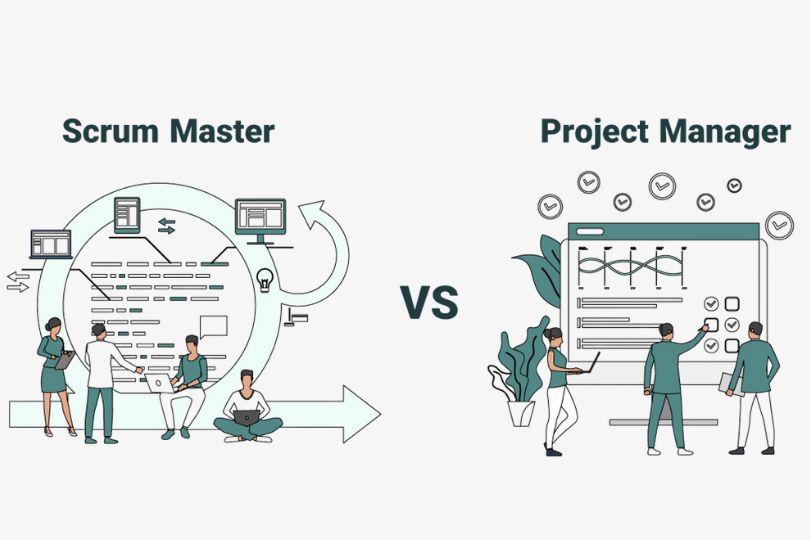
Scrum Master vs. Project Manager: What’s the Difference?
The roles of Scrum Master and Project Manager often create confusion due to their overlapping responsibilities in managing projects. However, they serve distinct functions, especially in organizations adopting agile methodologies. This blog explores the key differences between a Scrum Master and a Project Manager, providing actionable insights to help professionals better understand these roles and choose the right career path.
1. Core Responsibilities
Scrum Master Responsibilities
A Scrum Master focuses on facilitating the Scrum framework and ensuring the team adheres to agile principles.
- Facilitates Scrum ceremonies: Manages daily stand-ups, sprint planning, reviews, and retrospectives.
- Removes impediments: Identifies and eliminates obstacles that hinder the team’s progress.
- Coaches the team: Guides the team in adopting agile practices and becoming self-organizing.
- Protects the team: Shields the team from external disruptions and distractions.
Project Manager Responsibilities
A Project Manager oversees the entire project lifecycle, from initiation to closure, ensuring it meets its objectives.
- Defines project scope: Establishes the project’s goals, deliverables, and timeline.
- Manages resources: Allocates and manages team members, budget, and tools.
- Tracks progress: Monitors project performance, timelines, and milestones.
- Communicates with stakeholders: Maintains regular communication with clients, sponsors, and team members.
Key Takeaway:
While a Scrum Master ensures the team follows agile practices, a Project Manager focuses on delivering the project within the defined constraints.
2. Approach to Work
Scrum Master’s Approach
- Servant-leader mindset: Acts as a facilitator rather than a traditional manager.
- Iterative delivery: Encourages incremental progress through sprints.
- Team empowerment: Fosters a collaborative environment where the team makes key decisions.
Project Manager’s Approach
- Command and control: Often takes a directive approach in managing tasks and resources.
- Sequential process: Uses a linear approach (Waterfall) or a hybrid model for project execution.
- Accountability: Holds responsibility for project outcomes, including budget and timeline adherence.
Key Takeaway:
A Scrum Master supports an agile, iterative approach, while a Project Manager typically follows a structured, linear methodology.
3. Focus Area
Scrum Master’s Focus
- Team performance: Prioritizes team cohesion, communication, and productivity.
- Process improvement: Continuously enhances team processes through retrospectives.
Project Manager’s Focus
- Project delivery: Concentrates on meeting project goals, timelines, and budgets.
- Stakeholder satisfaction: Ensures that the project meets stakeholder expectations and delivers value.
Key Takeaway:
Scrum Masters emphasize team dynamics and agile processes, whereas Project Managers focus on achieving project deliverables.
4. Tools and Metrics
Tools Used by Scrum Masters
- Agile tools: Jira, Trello, and Azure DevOps for sprint management.
- Collaboration tools: Slack, Zoom, and Miro for team communication.
- Metrics: Velocity, cycle time, and sprint burndown charts to track progress.
Tools Used by Project Managers
- Project management software: Microsoft Project, Asana, and Monday.com for project planning.
- Reporting tools: Gantt charts, dashboards, and earned value analysis (EVA) for performance tracking.
- Metrics: Budget variance, schedule variance, and resource utilization.
Key Takeaway:
Both roles use different sets of tools and metrics tailored to their specific responsibilities.
5. Certifications
Scrum Master Certifications
- Certified ScrumMaster (CSM): Offered by Scrum Alliance.
- Professional Scrum Master (PSM): Provided by Scrum.org.
- SAFe Scrum Master: Focuses on scaled agile frameworks.
Project Manager Certifications
- Project Management Professional (PMP): Offered by PMI, globally recognized.
- PRINCE2: A process-based approach to project management.
- Certified Associate in Project Management (CAPM): Entry-level certification by PMI.
Key Takeaway:
Certifications play a crucial role in validating skills for both Scrum Masters and Project Managers.
6. Career Path and Opportunities
Scrum Master’s Career Path
- Entry-level roles: Scrum Master, Agile Coach.
- Mid-level roles: Senior Scrum Master, Program Manager.
- Advanced roles: Enterprise Agile Coach, Head of Agile Practices.
Project Manager’s Career Path
- Entry-level roles: Assistant Project Manager, Project Coordinator.
- Mid-level roles: Project Manager, Program Manager.
- Advanced roles: Portfolio Manager, Director of Project Management.
Key Takeaway:
Both career paths offer opportunities for advancement, but they cater to different interests and skill sets.
7. When to Choose Which Role?
Choose Scrum Master If:
- You enjoy facilitating team collaboration.
- You are passionate about agile methodologies.
- You prefer a servant-leader role over a directive one.
Choose Project Manager If:
- You excel at planning and managing complex projects.
- You enjoy working across different project phases.
- You are comfortable taking accountability for project delivery.
Key Takeaway:
Your choice should depend on your strengths, career goals, and interest in either team facilitation or project execution.
If you’re considering a career in project management or agile coaching, understanding the differences between these roles is crucial. Whether you’re inclined toward leading agile teams as a Scrum Master or managing complex projects as a Project Manager, there are numerous growth opportunities in both fields. Ready to take the next step? Explore relevant certifications, join agile communities, and start your journey today!