

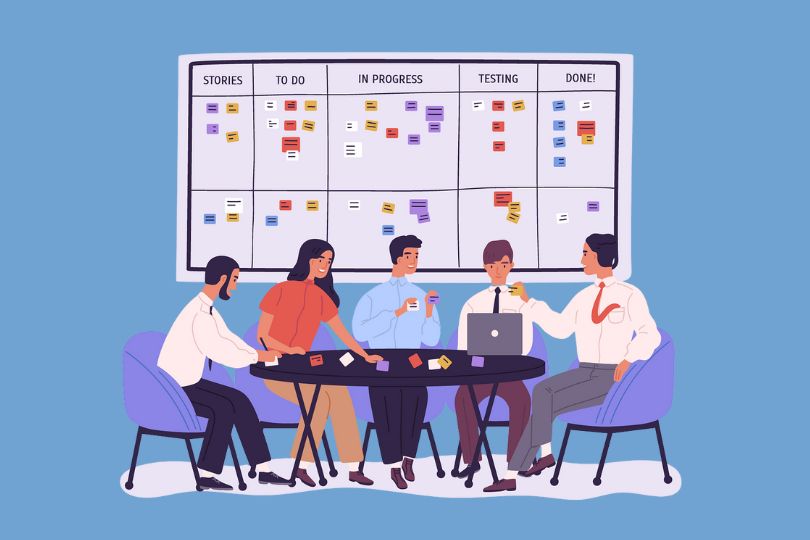
Real-Life Success Stories: Scrum Masters Making an Impact
Introduction: The Power of the Scrum Master Role
The Scrum Master role is vital in guiding Agile teams toward success. Scrum Masters act as facilitators, coaches, and problem-solvers, helping teams overcome challenges and stay focused on delivering value. While the Scrum Master’s job can be challenging, the impact of a skilled Scrum Master can be transformative—leading to higher productivity, improved collaboration, and a stronger team culture.
In this blog, we explore real-life success stories of Scrum Masters who have made a significant difference in their organizations. These stories not only highlight the challenges Scrum Masters face but also offer valuable lessons for those aspiring to excel in this role.
1: Scrum Master Success Story, Leading a Global Software Development Team
The Challenge
In a large multinational software company, a Scrum Master was assigned to a global development team working on a complex product. The team was geographically dispersed across time zones, and communication issues were frequently causing delays in the delivery of features. Collaboration was a struggle, and the development team lacked cohesion due to the distance between them.
The Solution
The Scrum Master took several key actions to improve the team’s performance:
- Implementing Clear Communication Tools: The Scrum Master introduced daily stand-ups via video conferencing tools, ensuring that team members in different time zones had the opportunity to connect. They also set up a centralized communication platform (Slack) where team members could communicate asynchronously.
- Creating a Collaborative Culture: To strengthen collaboration, the Scrum Master organized virtual team-building activities, encouraging team members to bond outside of work. They also initiated cross-functional collaboration by involving stakeholders early in the sprint cycle.
- Adjusting the Sprint Cycle: The Scrum Master tweaked the sprint planning sessions to accommodate time zone differences. Sprint goals were made more specific and measurable, with clear expectations for all team members.
The Result
Within three months, the team’s productivity increased significantly. The daily stand-ups and clear communication channels helped keep everyone aligned. The team also reported higher engagement and satisfaction due to the focus on collaboration and inclusion.
Actionable Takeaway: When managing remote or global teams, Scrum Masters should focus on creating communication strategies that ensure all team members feel connected, regardless of location.
2: Scrum Master Success Story, Overcoming Resistance to Change in a Traditional Environment
The Challenge
In a traditional, waterfall-driven organization, a Scrum Master was tasked with implementing Agile practices in a newly formed software development team. The team members were used to a rigid, hierarchical structure and were resistant to adopting Agile principles. The transition was met with skepticism and pushback from both developers and management.
The Solution
The Scrum Master approached the resistance with patience and a clear strategy:
- Educating the Team on Agile Values: The Scrum Master conducted workshops and training sessions to help the team understand the principles and benefits of Agile. They explained how Agile could improve not only the team’s efficiency but also job satisfaction and product quality.
- Leading by Example: Rather than forcing Agile practices on the team, the Scrum Master focused on leading by example. They facilitated Scrum ceremonies like sprint planning, retrospectives, and daily stand-ups with great care, ensuring that the team could see the benefits of these processes.
- Engaging Leadership: The Scrum Master involved management early in the transition process to ensure that leadership understood and supported the change. Regular feedback loops and demos kept leaders in the loop, fostering a sense of ownership and collaboration.
The Result
After six months, the team fully embraced Agile practices. They saw a marked improvement in productivity and quality, and the team’s morale improved as well. Management also recognized the value of Agile and began expanding the approach to other teams in the organization.
Actionable Takeaway: Scrum Masters should focus on education, leading by example, and engaging leadership to foster buy-in when transitioning teams from traditional to Agile practices.
3: Scrum Master Success Story, Turning Around an Underperforming Team
The Challenge
A Scrum Master was brought in to lead an underperforming team in a tech company. The team struggled with meeting deadlines, and the quality of deliverables was subpar. Communication was poor, and the team lacked a sense of ownership over their work. The Scrum Master had to turn things around quickly to prevent further delays and setbacks.
The Solution
The Scrum Master took a multifaceted approach to address the team’s challenges:
- Establishing Clear Goals and Expectations: The Scrum Master worked with the team to clarify their goals and establish clear expectations. They broke down larger tasks into smaller, manageable user stories, ensuring that each sprint had achievable goals.
- Improving Communication: The Scrum Master introduced daily stand-ups and retrospectives to foster open communication. They encouraged team members to voice concerns, ask for help, and provide feedback on the sprint process.
- Focusing on Continuous Improvement: The Scrum Master emphasized the importance of continuous improvement. They implemented a practice of regular retrospectives, ensuring the team reflected on what was working and what needed improvement after each sprint.
The Result
By the end of the quarter, the team had turned around its performance. They started consistently delivering high-quality work on time, and the team’s collaboration and morale significantly improved. The Scrum Master’s emphasis on clear goals, open communication, and continuous improvement helped the team find their rhythm.
Actionable Takeaway: Scrum Masters should help underperforming teams by setting clear goals, improving communication, and fostering a culture of continuous improvement.
4: Scrum Master Success Story, Scaling Agile Across an Organization
The Challenge
At a fast-growing startup, the Scrum Master was tasked with scaling Agile practices across multiple teams. The company had outgrown its initial startup phase, and new teams were being created rapidly. However, the teams were not aligned, and there was confusion around roles and processes. The Scrum Master had to ensure that Agile principles were implemented consistently across the organization.
The Solution
The Scrum Master implemented several strategies to help scale Agile across the organization:
- Standardizing Processes: They worked with all Scrum Masters and Agile coaches within the organization to standardize Agile processes. This ensured consistency and alignment across different teams, reducing confusion and miscommunication.
- Fostering a Collaborative Culture: The Scrum Master organized cross-team workshops and knowledge-sharing sessions to help teams collaborate and learn from one another. This created a sense of community and allowed teams to share best practices.
- Empowering Team Leaders: The Scrum Master empowered team leads and Scrum Masters to take ownership of their teams and processes. By fostering leadership at all levels, the Scrum Master ensured that Agile practices would continue to grow sustainably within the organization.
The Result
The startup successfully scaled its Agile practices across 10 teams within the year. Productivity and collaboration improved across the board, and the company was able to adapt more quickly to market changes. The Scrum Master’s leadership played a crucial role in ensuring that Agile became ingrained in the organization’s culture.
Actionable Takeaway: To scale Agile practices across an organization, Scrum Masters should standardize processes, encourage knowledge sharing, and empower team leaders to take ownership.
Conclusion: The Impact of a Skilled Scrum Master
These success stories demonstrate the profound impact that Scrum Masters can have on the success of their teams and organizations. Whether leading global teams, guiding organizations through Agile transformations, or turning around underperforming teams, Scrum Masters have the power to drive change, improve processes, and foster collaboration.
For aspiring Scrum Masters, these stories provide valuable lessons in communication, leadership, and problem-solving. By focusing on clear goals, continuous improvement, and team empowerment, Scrum Masters can help their teams succeed in even the most challenging environments.
Ready to make an impact as a Scrum Master? Explore our resources and training programs to enhance your skills and lead your team to success!