

How Scrum Masters Drive Continuous Improvement in Agile Teams
Introduction: The Role of the Scrum Master in Agile Teams
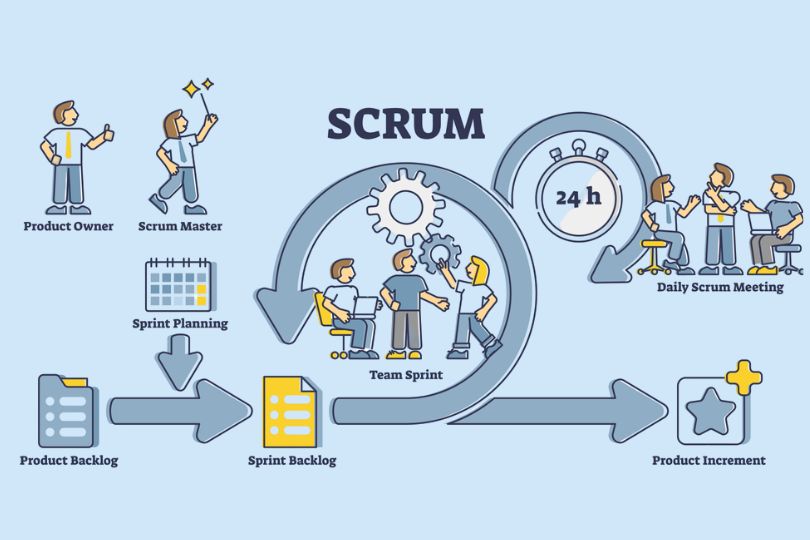
In today’s fast-paced and ever-changing business environment, companies are adopting Agile frameworks to ensure they can adapt quickly to market demands and customer needs. Scrum, one of the most popular Agile methodologies, places the Scrum Master at the heart of continuous improvement efforts. But what exactly does a Scrum Master do, and how do they drive ongoing enhancements in the performance and culture of Agile teams?
In this blog, we’ll explore how Scrum Masters facilitate continuous improvement, enhance team collaboration, and ensure that teams are consistently moving towards higher efficiency, innovation, and success. Let’s dive into the key ways Scrum Masters foster improvement in Agile teams.
What is Continuous Improvement in Agile?
Continuous improvement in Agile refers to the ongoing efforts to improve team processes, tools, and deliverables. It’s about finding ways to make each iteration more effective and efficient, thereby adding greater value to the product and increasing the overall quality of work. This principle is fundamental to Agile methodologies, as it aligns with the goal of delivering high-quality products in short, manageable cycles.
For Scrum teams, continuous improvement is not a one-time event but an ongoing journey. Scrum Masters play a pivotal role in guiding this process through various methods and practices.
The Scrum Master’s Role in Fostering Continuous Improvement
A Scrum Master is essentially a facilitator, coach, and servant leader for the Scrum team. While the Product Owner and development team focus on delivering high-quality features and value, the Scrum Master is dedicated to ensuring the team’s processes remain effective, efficient, and continuously improving.
Let’s explore some key responsibilities of Scrum Masters that drive continuous improvement in Agile teams.
1. Facilitating Regular Retrospectives
One of the most powerful tools for continuous improvement in Scrum is the Sprint Retrospective. This meeting provides the team with an opportunity to reflect on the past sprint, discuss what worked well, and identify areas that need improvement. The Scrum Master ensures that the retrospective is productive and focused on actionable insights.
By fostering a safe and open environment, Scrum Masters encourage honest feedback. They guide the team to pinpoint root causes of issues, identify opportunities for improvement, and set concrete actions for the next sprint.
Actionable Tip: Scrum Masters should ensure that retrospectives include both positives and areas for improvement. Focus on what can be done differently in the next sprint to improve team performance and morale.
2. Promoting a Culture of Feedback
A Scrum Master helps cultivate a culture of constant feedback where team members, stakeholders, and customers are encouraged to share their thoughts regularly. This feedback loop ensures that the product and processes align with customer needs and business goals.
Scrum Masters facilitate daily stand-up meetings, where team members share updates on their progress, challenges, and blockers. By continuously receiving and acting on feedback, teams can course-correct and optimize their approach for maximum impact.
Actionable Tip: Encourage constructive feedback during daily stand-ups and retrospectives. Scrum Masters should ensure the environment remains supportive, focusing on team growth rather than blame.
3. Ensuring Transparency and Visibility
Transparency is a core principle of Scrum, and Scrum Masters play a crucial role in making sure that progress, challenges, and decisions are visible to the team and stakeholders. By ensuring that everyone is aligned and has access to the same information, the Scrum Master removes confusion and silos.
They use visual tools like Kanban boards or burndown charts to provide real-time insights into the team’s progress, allowing for adjustments based on current conditions. This transparency also allows the Scrum Master to identify any potential bottlenecks or impediments early on.
Actionable Tip: Scrum Masters should ensure that all tools and processes used for tracking progress are up to date and accessible to the whole team. This enhances visibility and keeps everyone on the same page.
4. Removing Impediments
Scrum Masters act as problem solvers who remove obstacles that hinder the team’s progress. These impediments can range from technical issues to organizational roadblocks. By addressing these challenges, Scrum Masters help improve the flow of work and keep the team moving toward their goals.
Through proactive problem-solving and collaboration with other departments, Scrum Masters ensure that teams can focus on delivering value without unnecessary delays.
Actionable Tip: Scrum Masters should develop strong relationships with stakeholders and external teams to efficiently address and resolve any impediments that might arise.
5. Coaching and Mentoring the Team
Scrum Masters are also responsible for coaching the team in Agile principles and Scrum practices. They help individuals and teams improve their skills, foster collaboration, and adopt best practices. Through one-on-one coaching or team workshops, Scrum Masters equip their teams with the tools and knowledge to continuously improve their work processes.
Actionable Tip: Scrum Masters should organize regular coaching sessions to help team members refine their Agile practices, such as test-driven development, continuous integration, and pair programming.
Strategies for Scrum Masters to Drive Continuous Improvement
Now that we’ve explored the role of Scrum Masters, let’s dive into some actionable strategies they can use to accelerate continuous improvement.
1. Implementing Kaizen
The concept of Kaizen, or continuous improvement, originates from Japanese manufacturing but has been widely adopted in Agile environments. Scrum Masters can use Kaizen principles to encourage small, incremental improvements every day. This can be applied to both team processes and individual workflows.
For example, a Scrum Master might introduce new tools or processes in small batches, evaluate their effectiveness, and adjust accordingly. Over time, these small changes lead to significant overall improvement.
Actionable Tip: Scrum Masters should help the team identify one small change each sprint that can lead to incremental improvement. Track these changes over time to measure their impact.
2. Empowering the Team
An empowered team is more likely to take ownership of their work and identify areas for improvement themselves. Scrum Masters can drive continuous improvement by empowering team members to make decisions, solve problems, and suggest new ideas.
By creating an environment where the team feels supported and trusted, Scrum Masters encourage proactive behavior and innovation.
Actionable Tip: Scrum Masters should encourage team members to lead initiatives, try new practices, and experiment with different approaches. Celebrate successes and learn from failures to promote a growth mindset.
3. Continuous Learning and Adaptation
Agile is built on the principle of adaptation, and Scrum Masters must ensure that the team never stops learning. They can facilitate continuous learning by recommending books, online courses, conferences, or communities of practice. The key is to create an environment where learning is always valued.
Actionable Tip: Scrum Masters should schedule regular “learning hours” or “knowledge-sharing sessions” where team members can present new ideas, tools, or techniques they’ve discovered.
The Impact of Continuous Improvement on Agile Teams
By fostering a culture of continuous improvement, Scrum Masters help Agile teams become more effective, adaptable, and motivated. Over time, this leads to enhanced productivity, higher-quality products, and improved team morale.
Conclusion: Scrum Masters as Catalysts for Continuous Improvement
In Agile teams, the Scrum Master plays a pivotal role in driving continuous improvement. Through facilitation, coaching, feedback, and transparency, Scrum Masters ensure that teams evolve, adapt, and deliver exceptional value. Whether it’s through retrospectives, empowering team members, or introducing new improvement strategies, Scrum Masters are essential in fostering a culture of ongoing enhancement.
As Agile methodologies continue to grow in popularity, Scrum Masters will remain at the forefront of continuous improvement, helping teams to achieve their highest potential.
Are you ready to take your Scrum team’s performance to the next level? Subscribe to our newsletter for more insights on Agile best practices and continuous improvement strategies.